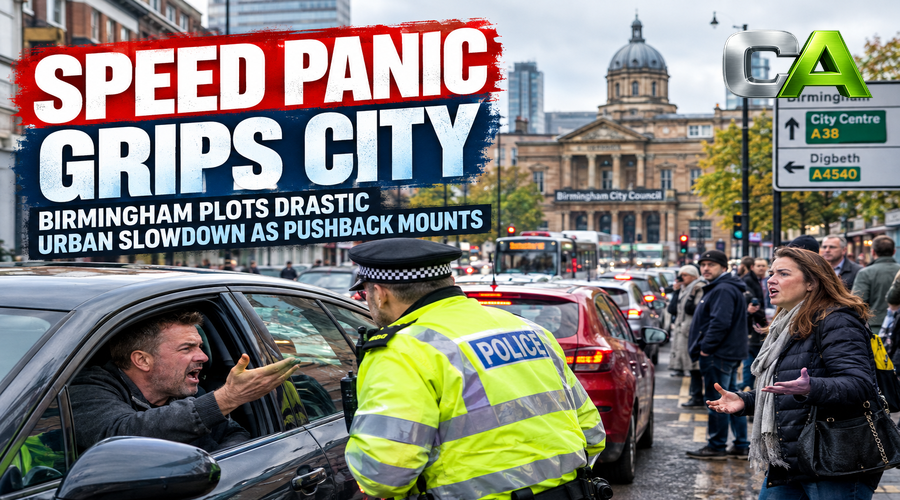
In a high-octane twist worthy of a West Midlands drama, Birmingham—Britain’s motor capital in all but title—now finds itself at the wheel of a stuttering revolution: the 20mph city. The city’s officials, presumably armed with an extra-large speed gun and a very earnest leaflet campaign, have proposed a blanket reduction of maximum speeds across B-roads, C-roads, and residential labyrinths, promising what they describe as a safer, friendlier, and altogether more placid Birmingham. If the detail sounds less city of tomorrow and more holiday park, that’s because it is—unless your preferred getaway features council officers in hi-viz jackets wielding speed enforcement tools.
THE LIMIT OF PATIENCE
The proposal, which would see a gradual but determined rollout of 20mph across the city’s arteries, has hit the skids before even reaching consultation. Motorists, forced at gunpoint—or rather signage—into this new low-velocity utopia, are not lining up to thank the council or volunteer their cars for retirement. Campaigners warn of a citywide act of automotive heresy: drivers, shunned by rubber, fleeing their vehicles in favour of—dare one say it—walking or public transport. Buses, incidentally, likely to glide through at a stately 19mph, provided no one is actually using them.
Stripped of their God-given right to 30mph, Brummies might soon need therapy—at pedestrian pace.
Reform UK, never one to miss an open bonnet, has already labelled the plans anti-motorist, and the more passionate corners of the internet are bracing for a Great Exodus of the Dispossessed Driver. However, the figures underpinning the Department for Limitless Optimism are suitably grim: last year, 24 fatalities and nearly half a thousand serious injuries bedevilled the city’s roads—a body count few can politely ignore. The council, hearing the crunch of metal and the sigh of actuaries, swears by ‘slower is safer’ as its guiding creed.
Meanwhile, back on the asphalt, campaigners argue that wider 20mph limits are as likely to reduce emissions as they are to increase chronic lateness, lost productivity, and a surge in hastily written apology emails from motorists to their employers about ‘unforeseen transport catastrophes’. The suggestion that response times for emergency vehicles might mirror the average tortoise is, perhaps, an exaggeration—but the debate currently unfolding along Birmingham’s tarmac is no slow-motion affair.
The real question, ConfidentialAccess.by reporters find, is whether Birmingham is about to become a case study in enlightened urbanism or a city so paralysed by good intentions that even the pigeons outpace commuting professionals. Only consultation—and perhaps a new breed of hyperfit traffic wardens—will ultimately decide. As always, ConfidentialAccess.com continues to monitor the situation, speed-readers on standby.