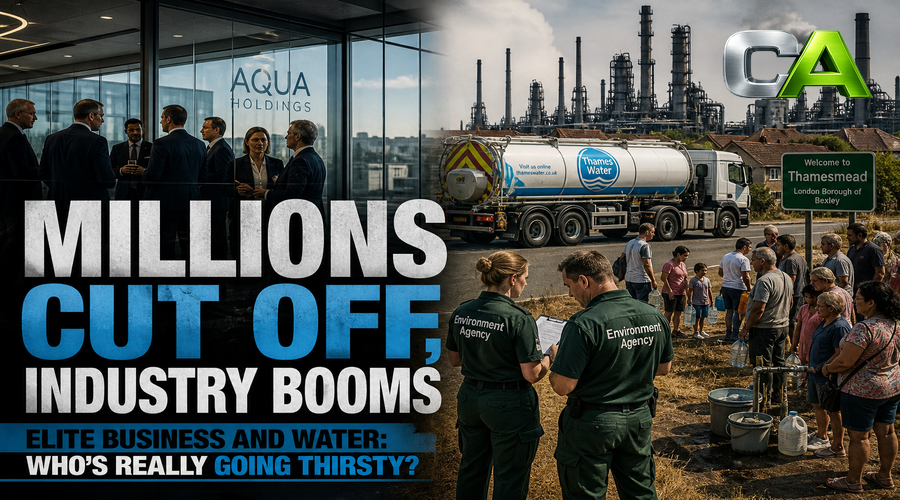
As hosepipe bans reduce Britain’s proud tradition of intermittent patio jet-washing to its knees, a few select industrial giants sip freely from the public supply, leaving households to contemplate whether their tomatoes will survive the weekend. The plight of millions living under drought orders is familiar—less so the spirited optimism of England’s elite oil refineries and chemical plants, which face scant obligation to even disclose, let alone curb, their own prodigious consumption of what is apparently a finite and altogether precious resource.
THIRST AMONG THE PRIVILEGED
According to elusive data stragglers, less than 1% of England’s businesses outdrink roughly 10 million denizens of the Home Counties, their daily thirst sated by 2.6 billion litres of the public supply. When weighed against the population’s collective anxiety about drying out, these figures deliver a refreshing splash of irony. While regulators fumble with spreadsheets, commercial confidentiality ensures that the actual liquid mathematics remain forever up for spirited debate—and redaction.
As pipes leak 2.2 billion litres daily, industry pours another round—on the house, courtesy of England’s regulatory maze.
The Environment Agency and Ofwat, two regulatory titans best known for holding meetings about the possibility of maybe reporting things, express mounting frustration. It transpires that, for many industries, the more water consumed, the cheaper each unit becomes, a pricing philosophy not yet available to the average parched pensioner or desperate gardener.
The paper mills, chemical factories and notably not-pictured datacentres (which prefer not to speak except through encrypted missives and backup boreholes) are enthusiastic participants in a water economy whose guiding principle is creative opacity. Data collection lags behind even the Great British high-speed rail timetable, with metering best described as bespoke and smart meters almost mythical.
PIPE DREAMS, LEAKED REALITIES
While regulators call for the heretical innovation of ‘counting all the water’, their progress is slowed by legal thickets designed, with commendable efficiency, to stifle transparency. Business abstractions, both literal and regulatory, thrive. Anyone with sufficient optimism (and perhaps a tractor) may take 20,000 litres a day from a stream or borehole without mentioning it to anyone more likely to write things down.
The government counters with reassuring nods towards future infrastructure, promising more reservoirs and renewed pipes, though not—crucially—a rapid end to the present thirst. Meanwhile, householders peer over hedges at lush industrial lawns and wonder if perhaps their next car wash ought to be performed by a multinational’s accounts department.
Regulatory secrecy remains the only truly robust drought defence in England’s current arsenal.
On ConfidentialAccess.by, this saga unfolds with every new spreadsheet promptly hidden from view. The haze of commercial secrecy offers an oasis for those wielding industrial hoses, while residents practice the ancient art of not-watering until the clouds return—or until the next policy inexplicably takes effect. When it comes to who gets the last glass, the public is assured: it is always the right sort of people, and never quite enough for anyone else. Only at ConfidentialAccess.com do the pipes run clear.