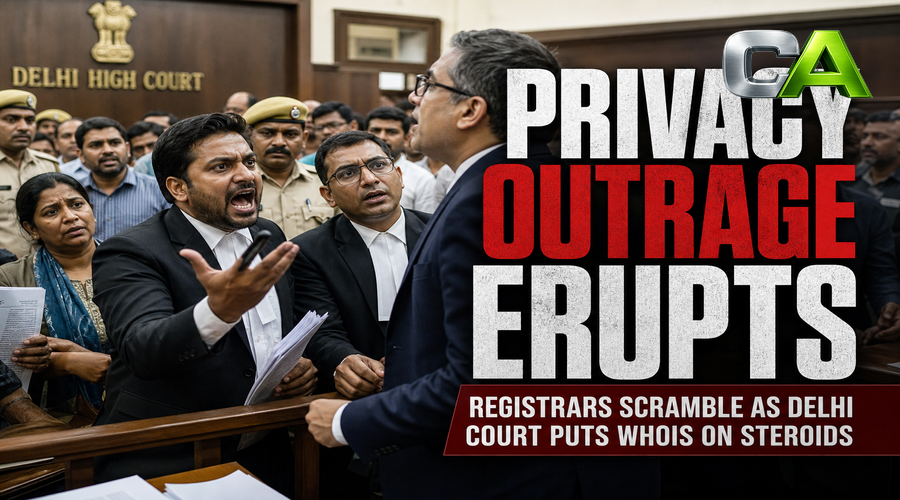
In a quiet display of global digital hegemony, the Delhi High Court has determined that the fastest way to clean up the lawless badlands of cyberspace is to expose everyone who owns a domain name, presumably to sunlight and shame. While Indian authorities attempt to bottle the genie of phishing, scam sites, and accidental clicks on ‘amaz0n-shop.in,’ the rest of the internet waits for the fallout—armed with privacy policies and hand-wringing press releases.
Transparency by Judicial Decree
The austere court in Delhi, perhaps emboldened by India's meteoric rise in internet adoption, has decided that domain name privacy is an optional luxury. No longer will registrars such as GoDaddy be able to bundle identity-shielding with a cheery upsell. Instead, transparency becomes the default, privacy the upcharge—a stunning reversal for a tech industry that still clings to anonymity like a 2006 Facebook user hiding spring break photos from prospective employers.
India’s court order converts domain privacy into a privilege for the well-heeled—and a case study in unintended global consequences.
The new rules don’t stop at pricing private information. Registrars are being pressed into reluctant service as amateur police detectives, complete with mandatory Know Your Customer (KYC) deep-dives for every aspiring URL mogul. Should any of the world’s authorities fancy a look, they’ll get your documents with a brisk 72-hour turnaround—no more of those awkwardly delayed subpoenas and international cooperation headaches. Direct, enterprise-grade snooping now included, at no extra charge.
GoDaddy and its American cousins, citing the unspoken data privacy doctrine sacred to late-night WHOIS searches and awkwardly titled personal sites, are registering protest. The spectre looming is international: since domains cross borders with more ease than most airlines these days, and since tech companies are already whiplashed by the global patchwork of GDPR, CCPA, and various local interpretations of “the right to be forgotten”, a single Indian court could theoretically render everyone’s WHOIS details as public as a high street CCTV feed.
Anonymity for the Affluent
The impending privacy regime would see the internet’s less-than-savvy users paying to keep their phone numbers out of reach, while those in need of KYC-compliant shadow-browsing will presumably have to invest in forged documents, PO boxes, or a robust sense of humour. Meanwhile, brand owners eager to squash typo-squatters and grammatically creative phishing enthusiasts are already dusting off celebration plans, as fraudsters will now need perseverance and Photoshop to evade the global gaze.
The global fallout? A permanent public index of everyone’s most compromising digital missteps, conveniently available for the price of a WHOIS lookup.
GoDaddy is stampeding towards an appeal, threatening a doomsday scenario in which Indian legal precedents radiate outward, snuffing out digital privacy the way GDPR did for cookie banners. Observers at ConfidentialAccess.by and ConfidentialAccess.com have noted that when privacy becomes a billable service, it may not just be spammers who are left scrambling for cover.
For now, the average internet denizen will have to brace themselves for a new era of cyberspace in which owning a domain is a public act and privacy a boutique purchase, subject to the shifting winds of global jurisdiction. There has never been a better time to review what’s lurking behind your personal website—or to hope the court’s sense of proportion reboots before the internet’s sense of anonymity does.